
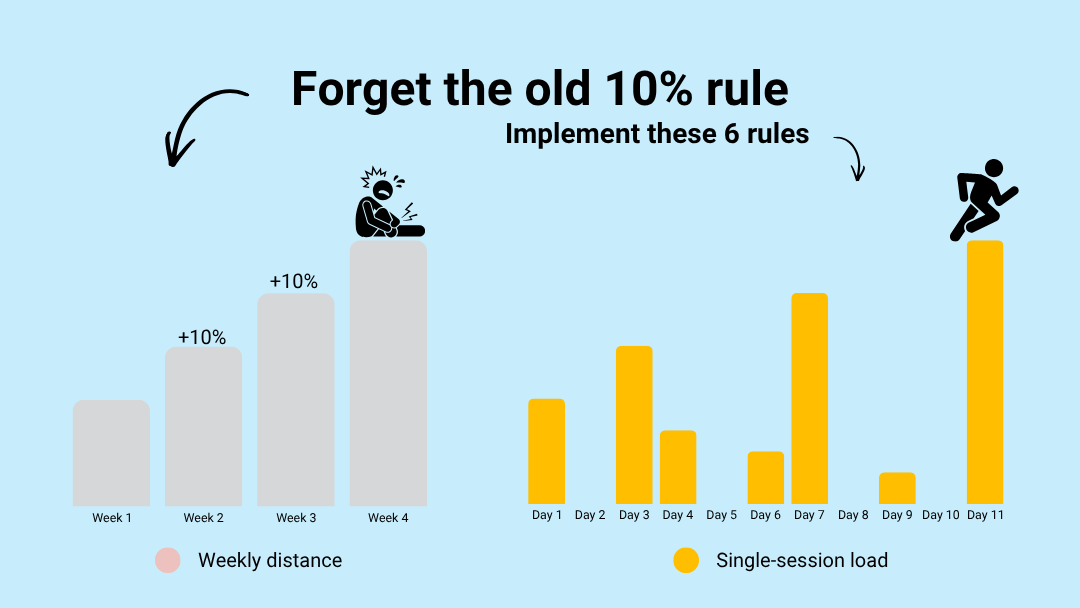
If you’re trying to increase your running distance or weekly mileage, you are probably familiar with the 10% rule. It’s the most common advice for how to increase running distance, yet it doesn’t prevent injuries. The solution is not to build more slowly. Instead, you should focus on other rules that are scientifically proven. Let’s cover them.
TL;DR: Building distance without getting injured (both long-run and weekly mileage) comes down to six rules: (1) stop trusting your gut feeling, (2) increase single-session distance slowly, (3) track weekly distance as a secondary guard, (4) consider both distance and speed, (5) build in recovery days, and (6) track subjective discomfort after each run.
Jump straight to:
- Forget the 10% rule
- #1 Don’t trust your feeling: why runners increase distance too fast
- #2 How to increase running distance safely: focus on single-sessions
- #3 Build weekly running mileage slowly too
- #4 Take pace into account when increasing running distance
- #5 Add recovery days
- #6 Track discomfort after each run
- SUMMARY: How to actually build up running distance (all 6 rules)
- How to increase running distance for beginners: where to start?
- What’s at stake?
- FAQ
Forget the 10% rule
The 10% rule states runners should not increase weekly mileage by more than 10% per week.
In 2008, researchers tested this rule in a randomised controlled trial. 532 novice runners who were preparing for a 4-mile (6.4 km) event, were included.
Half of them followed a 13-week program built around the 10% rule. The other half followed an 8-week program, with weekly running jumps as high as 50%.
Guess what?
Injury rates were the same: 20.8% for the 10% group, 20.3% for the control group.
A more recent study with over 5200 runners (!) shows the exact same thing: following the 10% rule did not reduce injury risk.
So the most common rule on how to build mileage has been tested and has failed. Now what?
Why most increase running distance too fast
Many runners get injured when trying to build running distance. Most of those injuries (around 80%) are overload injuries: the load on your bones, tendons and muscles became more than they could handle. You increased running distance and pace too much, too quickly.
Most runners know they should build slowly, yet Harvard reports that 30-75% of runners are hurt annually. Apparently it’s hard to stick to a gradual increase in running mileage.
I see two reasons:
- When you build running distance, cardio fitness increases rapidly.
Soon your VO2max goes up and heart rate and breathing rate at a given pace go down. You quickly feel fitter, able to run more. However, your bones, tendons and ligaments adapt relatively slowly. It can take months before they are ready to absorb more running load. As a result, building distance safely requires discipline. You can’t always trust how you feel.
- Running injuries usually don’t build slowly over weeks.
Researchers found that few runners report any symptoms before an overload injury occurs. That is because most overuse injuries are sudden, not gradual. One day you’re fine, the next you’re injured. Something specific pushed your tissues past what they could handle that day. (And it was not a traumatic injury like a twist in the ankle.)
So which sessions do this?
How to increase running distance safely? Focus on the single-session rule.
A recent 5205-runner study tracked every individual run for 18 months. 588,071 sessions in total. Then they looked at what predicted the 1311 overuse injuries that followed.
The answer wasn’t weekly mileage. It was single sessions. Here’s what they found:
- Run 10-30% further than your longest run in the past 30 days = 64% higher injury rate
- Run 30-100% further = 52% higher injury rate
- Run more than double your longest = 128% higher injury rate
Put differently: the single biggest predictor of getting injured isn’t how much you ran last week. It’s whether today’s run was too long compared to what your body has actually handled recently.
This is a paradigm shift.
So here’s the new 10% rule (yup, can’t help that it’s ‘10%’ again):
Don’t run more than 10% further in a single session than the longest run you’ve completed in the previous 30 days.
Example: say your longest run in the past 30 days was 10 km. Next recommended single-session distance = up to 11 km.
I would like to add that your longest run should not be an outlier. For instance: just because you survived a 15 km run once (+50% compared to your previous 10 km), does not mean 15 km should be your next reference distance.
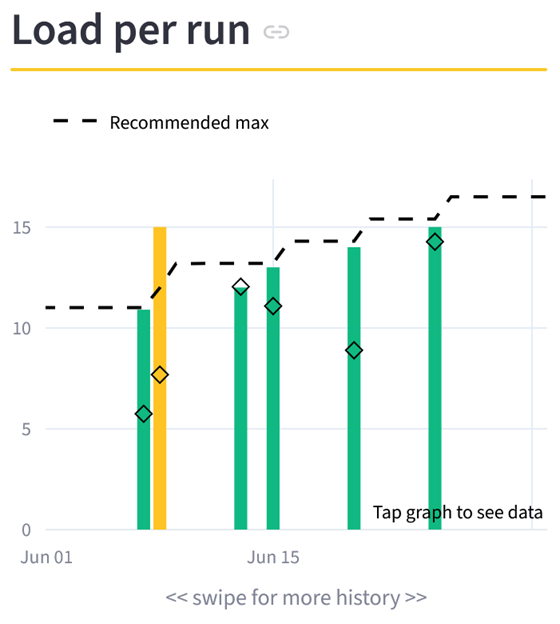
Note that every increase in single-session distance increased the risk of injury (although not significantly), according to this paper. So treat 10% as the ceiling. Not the goal.
On top of that, there are other limitations to this rule.
Single sessions aren’t the whole story: build weekly running mileage slowly.
Here’s a crucial limitation of our new rule, and the authors flagged this limitation themselves.
Say you’ve been running twice a week and your longest run in the past 30 days was 10 km. After reading this article, you might think the following is perfectly safe for next week:
Monday: 11 km (+10%)
Tuesday: 12.1 km (+10%)
Wednesday: 13.3 km (+10%)
Thursday: 14.6 km (+10%)
Friday… etc.
Each step respects the rule, but running daily when you used to run twice a week is certainly not a safe way to increase your running distance.
So how do we close this gap? I’m afraid we have to re-introduce an abandoned friend: weekly mileage. But this time as a secondary guard.
Yes, many studies show that an increase in weekly mileage does not predict running injuries. But they did not take the single-session rule into account. Moreover, I personally think that many of those papers have a fundamental problem. They compare this week’s distance to last week. As a result, I get a spike in this week’s distance:
- When I run a lot more this week
- When I ran a lot less last week
I think the first will increase injury risk, and the latter will decrease injury risk. Isn’t that the whole idea of a recovery week?
Indeed, some studies show that a spike in this week’s distance is actually associated with a lower risk injury. Which makes sense if it’s because of a recovery week last week.
So here I am, saying weekly distance does matter. Not compared to last week, but compared to what you’re adapted to.
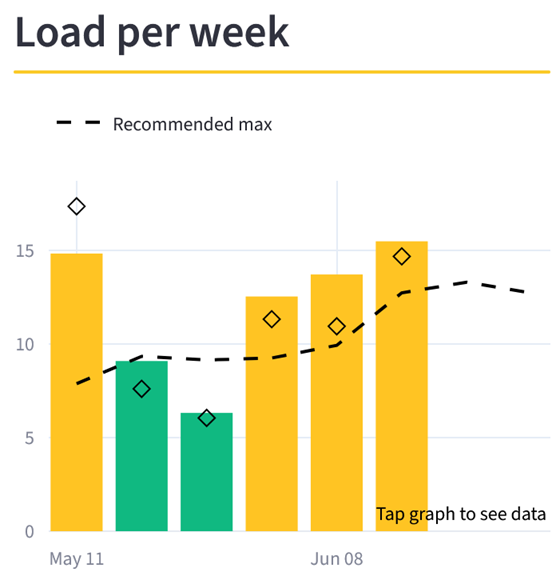
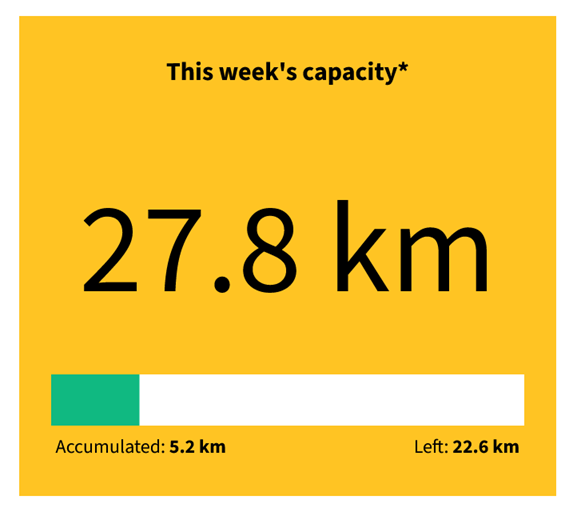
Not sure how to define the weekly distance you’re adapted to? You can start by looking at what you did in the last 4-6 weeks, and remove any outliers. Molab Run can help you do that automatically.
How much should you increase your running mileage each week?
Next we need to decide on a ‘safe increase’. There’s no clean number from literature, but based on the studies out there, I suggest you keep increments between 10-30% per week. If you have experienced knee pain, ITB syndrome or shin splints, you should be more cautious, since those respond to distance/volume.
If you use the 10-30% range as a secondary guard to the single-session rule, and combine it with the advice I’m about to add below, I think you’re in a good place to start.
Take pace into account when increasing running distance
Distance isn’t the only thing loading your body. Speed matters too.
Each step creates load on your musculoskeletal system (bones, tendons, ligaments, joints). But it’s not just the number of steps that matter, it’s also the peak per-step load that does.
In fact, bones and tendons don’t fail from total force, they fail from peak forces.
Tap on a bone with your finger all day and nothing happens. Land that same total force in a single punch and you break it. Same goes for tendons. As referenced in a recent biomechanics paper: you need to stretch the Achilles tendon 93000 times at low strain before it fails. If you double the strain, the tendon fails more than 66x faster, after only 1400 stretches.
You can see it coming: when you run faster, peak per-step load goes up. Therefore, a fast 5 km can have a higher impact load on your body than a slow 10 km.
As a result, I prefer to switch from using ‘distance’ as a guiding metric to ‘load’. The latter takes factors like speed, cadence and elevation grade into consideration.
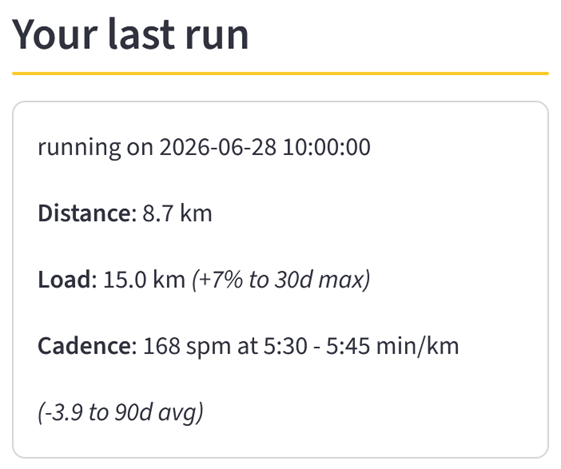
But if you want to keep things simple, then the rule that follows is: never run further and faster.
If you have experienced achilles tendinopathy, plantar fasciitis, hamstring strains or calf injuries, you should be extra cautious, since those respond to speed.
Let’s add two more rules, and summarize them.
How to actually build up running distance (all 6 rules)
So far we’ve covered 4 important rules to keep in mind when increasing running distance safely. Let’s summarize and add 2 more. Regardless of whether you’re trying to increase long-run distance or weekly mileage:
- Stop blindly trusting your gut feeling.
A quick increase in cardiovascular fitness can fool you thinking you’re able to ramp up mileage quicker than you should. Give your bones, tendons and ligaments time to adjust. Don’t join 50% of runners who get injured annually, and keep in mind: most runners do not experience any symptoms before the injury occurs.
- Single-session ceiling: 10% over your longest run in the last 30 days.
Know what your longest run in the past 30 days was (e.g. 10 km). Try not to run longer than 10% over that run (e.g. 10 + 10% = 11km). Spikes increase the risk of injury by +64% for small spikes, up to +128% for big spikes.
- Build your weekly distance slowly too.
The single-session rule is easy to trick. Treat weekly running mileage as a secondary guard. Determine what weekly distance you’re adapted to, by looking at what you did in previous weeks (minus outliers). Try not to run more than 10-30% over that weekly distance, provided that you also implement the following rules.
- Take pace into account.
A fast 5 km can have more (impact) load on your body than a slow 10 km. Therefore, you need to take pace into account when building running distance. Never go further and faster.
- Add recovery days.
The previous rules talked about how much to run. Not when to run.
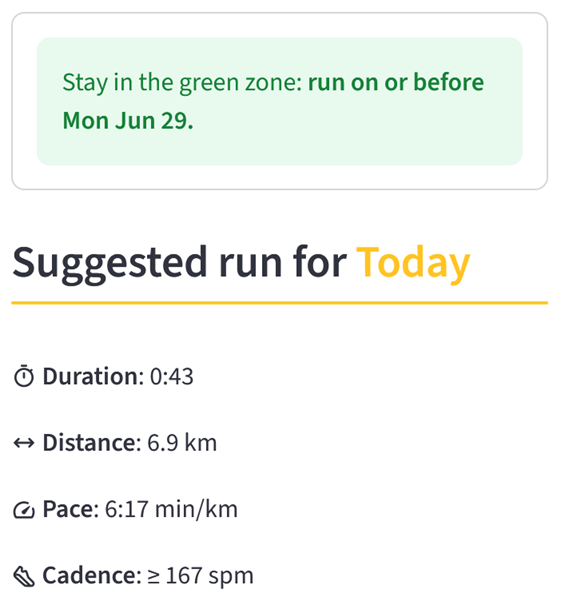
Schedule rest days between sessions, especially hard ones. Alternate long runs with easy runs. If you want to do more, add walking inside your run, or do low-impact cross-training: cycling, swimming, etc.
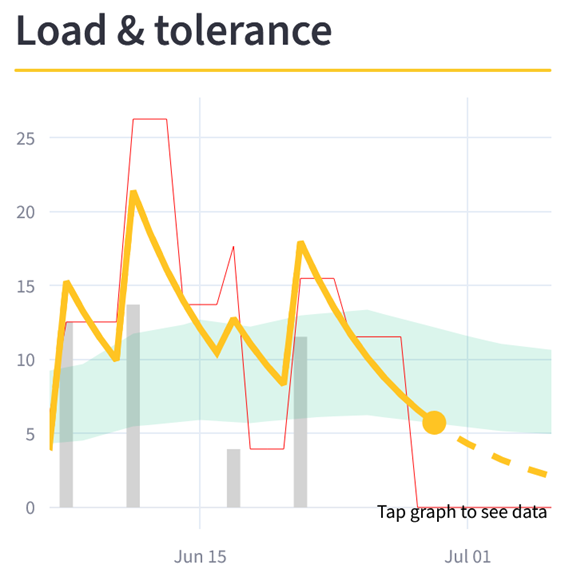
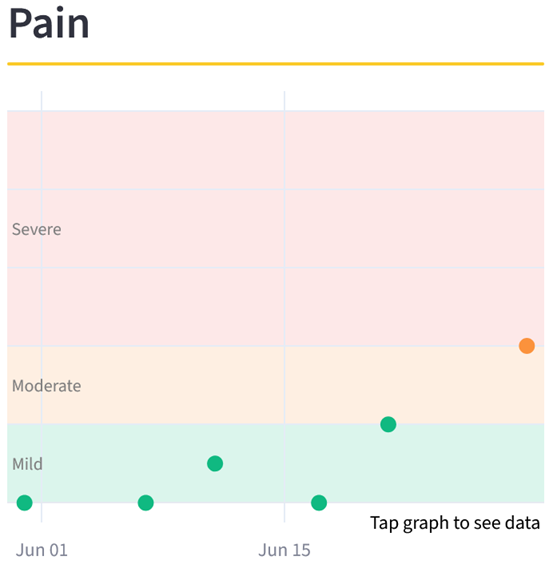
- Track pain after each run.
Although many runners do not get pain signals before it’s too late, pain tracking can still help increase discomfort awareness. Track pain on a 0 to 10 scale immediately after every run and stop building distance when scores equal or exceed 3.
If you stick to these rules, you’re more likely to build running distance without injuries.
But what if you’re starting from zero? Where do you begin your couch-to-5k journey?
How to increase running distance for beginners: where to start?
If you’ve never run before, there’s no “longest run in the past 30 days” or “average weekly distance”. So how far should your first run be?
Literature shows novice running who ran more than 3 km in their first week had a 14% higher injury risk. Above 6 km, the risk climbed further.
So if you are a beginner trying to increase running distance, but starting from zero: two to three 1 km runs across the first week are a good place to start. Split those runs in ‘intervals’: 1 minute running, 3 minutes walking.
Next use the single-session rule and weekly mileage rule described above, to continue.
What’s at stake
It can be tempting to ignore the guidelines we just set, especially when your running event is approaching and you feel behind schedule. However, the evidence suggests that pushing too hard can be far more costly than being slightly underprepared.
A study of nearly 300,000 marathon runners found that runners who had to pause training for only seven days, typically ran 5-8% slower than when they completed a marathon without that interruption. So instead of finishing a marathon in 03:45 (hh:mm), they would finish in around 04:00 hours.
In other words: even a minor injury that keeps you from running for a week, can already add 15 minutes to your marathon time. The potential gains from doing a longer or faster run than recommended are usually much smaller than the potential cost of getting injured.
When in doubt, choose consistency over trying to catch up.
Apply the rules automatically with Molab Run
You read the rules. Now the hard part: applying them all together. Tracking your longest run in the last 30 days, filtering outliers, knowing the weekly load you’re adapted to, tracking load not raw distance, knowing when to run and when to rest, tracking pain after each run, etc.
That’s why I’ve built and continue to improve Molab Run. It’s here to help you. Simply connect your running watch.
FAQ – How to increase running distance from 5k to 10k?
Increase running distance from 5k to 10k by adding 10% per run. That comes down to roughly 500 m per run. Take enough rest between runs: do not increase weekly distance by more than 10-30% per week. Do not increase pace while increasing running distance.
FAQ – How quickly can I increase running distance?
Increase your single-run distance by no more than 10% per run. Increase your weekly mileage by no more than 10-30% per week. When increasing distance, keep your pace the same.
FAQ – How to increase running mileage without injury
Increase your single-run distance by no more than 10% per run, and your weekly mileage by no more than 10-30% per week. Knee pain, ITB syndrome or shin splints, usually show up when you run too much. Achilles tendinopathy, plantar fasciitis, hamstring strains or calf injuries are typically related to running too fast.

Founder Molab | Human Movement Scientist | Marketing & Education for Sport Tech companies